Local SEO Near You: The Complete Optimization Guide
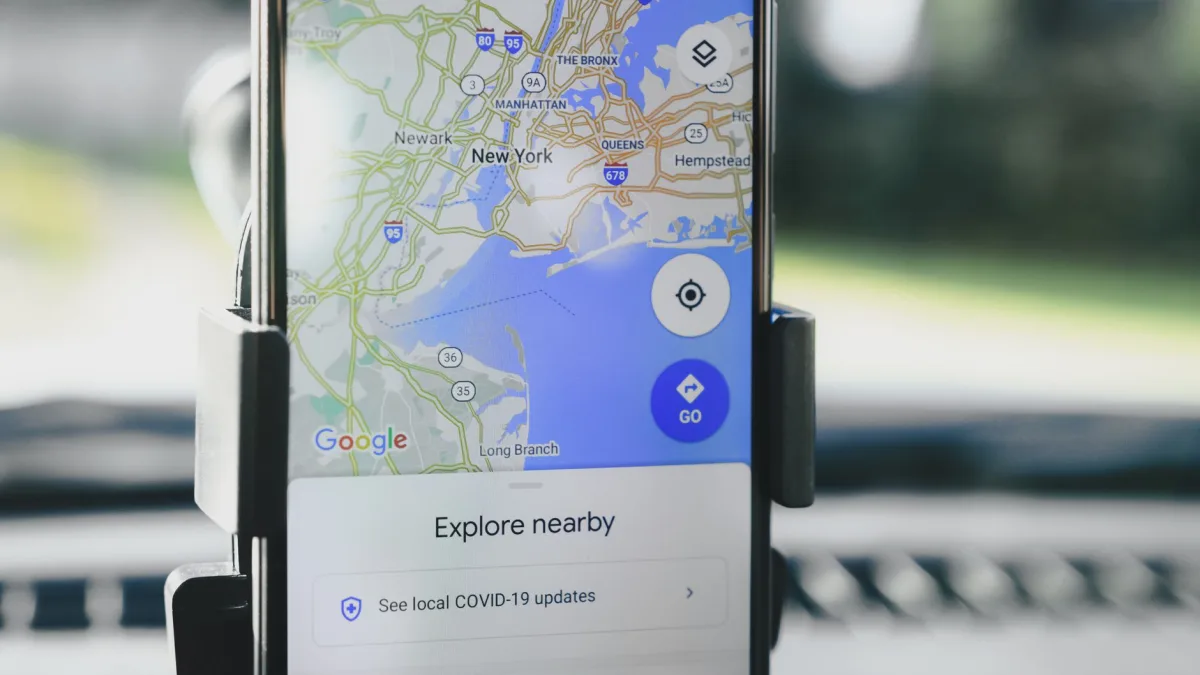
Local search engine optimization is the practice of improving how a business shows up when someone searches for a product or service tied to a place — a city, a neighborhood, or simply "wherever I am right now." That covers two overlapping goals: ranking in the local map pack, the three-listing block with a map that Google shows above regular organic results, and ranking in the regular organic results for searches that carry local intent, like "plumber," "coffee shop," or "dentist that takes new patients."
The "near me" part of that query pattern used to require typing the actual words "near me." It doesn't anymore. Google has gotten good enough at reading location signals — the device's GPS, the IP address, past search history, even the phrasing of the query — that it treats "plumber" typed from a phone in Austin almost the same way it treats "plumber near me." That shift matters, because it means you can't chase "near me" as a literal keyword to sprinkle into a page. You have to build the signals that tell Google where your business actually operates and who it actually serves.
The Three Signals Google Uses to Rank Local Results
Google's own documentation on how local results are ranked names three factors: relevance, distance, and prominence. Relevance is how well a business profile matches what someone is searching for — a complete, accurately categorized profile ranks for more relevant queries than a sparse one. Distance is calculated using the searcher's location, or the location named in the query, like "dentist in Round Rock," relative to your business address or service area. Prominence is a composite of how well-known and well-regarded the business is: review volume and rating, backlinks and press mentions, and how complete and active the listing itself is.
None of these three work in isolation. A business with perfect distance, right around the corner, but zero reviews and an empty profile still loses to a business two miles further away with a complete profile and steady review activity. That's why local SEO is rarely one fix. It's the accumulation of a dozen small, correct details.
Google Business Profile Is the Foundation
For most businesses, Google Business Profile, formerly Google My Business, does more for local rankings than any other single asset. It's free, it's the primary input for the map pack, and an incomplete profile is the single most common reason a business doesn't show up at all.
- Claim and verify the listing under the correct, legal business name — not a name stuffed with keywords like "Joe's Plumbing - Best Plumber Round Rock Emergency 24/7," which violates Google's guidelines and risks suspension.
- Pick the most specific primary category available, then add secondary categories for every service you genuinely offer.
- Fill in a service area for businesses that travel to customers, or a full street address for businesses customers visit.
- Add real photos regularly, not just once at setup — interior, exterior, team, and completed work.
- Use the Products, Services, and Posts features to describe specific offerings in plain language, not vague marketing copy.
- Answer questions in the Q&A section yourself instead of waiting for someone else to answer them incorrectly.
On-Page Signals That Back Up the Profile
Your website needs to say the same thing your Google Business Profile says. Title tags and H1s that name the service and the city, such as "Emergency Plumbing in Round Rock, TX," give both users and Google unambiguous relevance signals. If you operate in multiple cities or neighborhoods, build a genuine, unique page for each one, not a template with the city name swapped and nothing else changed, which reads as thin content to both users and search engines.
Structured data helps too. LocalBusiness schema markup lets you state your name, address, phone number, hours, and service area in a format search engines can parse directly rather than infer from a page's layout. It won't manufacture rankings on its own, but it removes ambiguity that could otherwise work against you.
- Keep your name, address, and phone number identical, character for character, everywhere it appears: website footer, contact page, and every directory listing.
- Embed an actual Google Map on your contact or location page, not just a static image.
- Add LocalBusiness schema with accurate hours, price range, and service area.
Reviews Function as a Ranking Signal, Not Just Social Proof
Review count, recency, rating, and how a business responds all feed into the prominence factor described above. A business that hasn't received a new review in eight months reads, to both the algorithm and a prospective customer, as possibly inactive.
The sustainable way to build reviews is to ask, consistently, at the moment a customer is happiest, right after a job is completed or a purchase is picked up, rather than in occasional bulk campaigns. Buying reviews or incentivizing them with discounts violates Google's policies and is detectable through unnatural velocity and language patterns. It also erodes trust the moment a customer notices a review that clearly wasn't written by a real person. Responding to every review, especially negative ones, shows both prospective customers and Google that the profile is actively managed rather than abandoned.
Citations Are Unglamorous but They Still Matter
A citation is any mention of your business name, address, and phone number on another site, whether or not it links back to you. Data aggregators feed information to GPS systems, voice assistants, and directory sites, so a single inconsistency at the source can propagate into dozens of small variations across the web: "St." in one place, "Street" in another, an old suite number that never got updated. Each inconsistency is a small trust problem for Google, which is trying to confirm your business is a real, stable, single entity rather than several loosely related ones.
Start with the platforms that carry the most weight — Google Business Profile, Bing Places, and Apple Maps — then move to industry-specific directories relevant to your field (a law firm and an HVAC company don't belong on the same niche directories) and to genuinely local ones, like a chamber of commerce or a regional business association.
Local Keyword Research, Including "Near Me" Terms
Most local search queries follow one of a small number of patterns: "[service] in [city]," "[service] near me," "[city] [service]," or a plain category term typed from a device Google already knows the location of. You rarely need to guess at these patterns. You need to confirm which variants your specific market actually uses, because "near me" volume and "[service] in [city]" volume can differ meaningfully between markets and industries.
The cheapest research source is data you already have. Google Search Console's Performance report shows the exact queries your site already gets impressions for, filtered by page, which is a reliable way to find phrasings you haven't targeted on purpose. Google's autocomplete and "People also search for" suggestions surface how real users phrase things in your specific category. Beyond free sources, keyword tools such as Google Keyword Planner, Semrush, and Ahrefs let you check search volume by exact geography and compare "near me" phrasing against explicit city-name phrasing for your own terms, rather than assuming one always outperforms the other.
- Pull existing queries from Search Console before assuming what people search for.
- Compare "[service] near me" against "[service] in [city]" for your own market instead of assuming which one wins.
- Check volume at the metro level and the neighborhood level separately if you serve a large market, since they often diverge.
Local SEO Tools, Organized by the Job They Do
There's no single "best" local SEO tool, because the category covers several distinct jobs and most businesses only need one or two of them. It's more useful to understand what each job looks like than to chase a ranked list.
For a single-location business, Google Business Profile's built-in Insights and a free Search Console account cover a surprising amount of this before a paid tool becomes necessary.
- Citation building and consistency checks: tools like Moz Local, Whitespark, and Yext push consistent name, address and phone data to directories and flag mismatches you'd otherwise never find manually.
- Local rank tracking: a standard rank tracker shows one national position, which is close to meaningless for map-pack results that shift by neighborhood. Grid-based tools like Local Falcon show how a ranking actually varies across a map.
- Review management: platforms built around review requests and centralized response, including BrightLocal and several all-in-one suites, matter most once you're managing more than a handful of locations.
- General keyword and competitive research: Semrush, Ahrefs, and Google's own Keyword Planner all support geography-filtered searches, which is the feature that matters most for local work specifically.
Mistakes That Quietly Cap a Local Ranking
These are the recurring issues that show up across otherwise solid local SEO work, and each one is easy to fix once you know to look for it.
- Stuffing keywords into the Google Business Profile name field. It looks like a shortcut and instead risks suspension of the entire listing.
- Creating a second listing instead of fixing or reclaiming an old one, which splits reviews and confuses the aggregation Google is trying to do.
- Letting name, address, or phone details drift after a move, a phone number change, or a rebrand, then never auditing the older citations that still show the old details.
- Treating citation building as a one-time task rather than a periodic check.
- Copying a single page's content across every city page with just the city name swapped, which reads as thin, templated content to both users and search engines.
- Going quiet on reviews after the first burst at launch instead of maintaining a steady, ongoing request habit.
Frequently asked questions
What's the difference between local SEO and regular SEO?
Regular SEO optimizes for relevance and authority at a broad or national scale. Local SEO adds a location layer — Google Business Profile, citations, and proximity — on top of the same fundamentals, because the ranking question shifts from "what's the best answer" to "what's the best answer near this specific person."
How long does local SEO take to show results?
It depends heavily on how much foundational work is missing when you start. An unclaimed profile, inconsistent citations across the web, and zero reviews take longer to fix than a profile that just needs regular activity and a few missing categories. Businesses in lower-competition categories or smaller markets typically see movement sooner than those competing in dense metro areas.
Do I need a physical address to rank in local search?
No. Service-area businesses such as plumbers, cleaners, and mobile mechanics can set a service area instead of a public address in Google Business Profile, as long as they genuinely serve that area from a base location, even if that location isn't listed publicly.
Is "near me" still something I should target directly?
Not as literal text to insert into copy. Google infers "near me" intent from device and query signals regardless of whether someone types the words, so the more productive target is the underlying signals: a complete profile, accurate service area, and consistent citations, rather than the phrase itself.
What's the best free tool for local SEO?
Google Business Profile and Google Search Console together cover the two most important free jobs: managing how you appear in local results and seeing which real queries already bring people to your site.
Updated: August 26, 2026